How can Nigeria lead West Africa’s offshore oil and gas future?
11 Nov 2025

By Stewart Maxwell, Technical Director and Ben Cannell, Innovation Director, Aquaterra Energy.
Estimated read time: 9mins
Nigeria is emerging as the driving force behind West Africa’s offshore oil and gas future. With rising local ownership, well intervention strategies, modular offshore platforms, and growing focus on renewables and CCS, the country is positioning itself as both a short-term production leader and a long-term energy transition hub.
At Aquaterra Energy, we have worked in Nigeria for more than 15 years, supporting operators with offshore platforms, intervention campaigns and engineering expertise. Over that time, we have seen steady progress but today there is a greater feeling of optimism and momentum than at any previous moment. Local operators are seizing the opportunities presented by transferred ownership of resources, confidence is growing, and new opportunities are unlocking fresh momentum.
Already one of Africa’s largest economies, Nigeria is on track to become the world’s 14th largest by 2050, ahead of South Korea and Italy. Energy is expected to play a key role in this growth story and the country has a strong platform to build on. Advanced fabrication yards, infrastructure and skilled engineers are in place and according to the International Energy Agency, Nigeria’s natural gas production has grown more than 200 percent since 2000. While investment uncertainty and regulatory ambiguity have slowed progress in the past, recent changes suggest an exciting new chapter has opened.
The founding of the Nigerian Upstream Petroleum Regulatory Commission (NUPRC) is introducing a clear direction for the upstream sector, while the opening of the Dangote Refinery is a major step towards capturing more downstream value domestically. Most importantly for the offshore industry, the transfer of assets from international oil companies to Nigerian operators is creating opportunities for local firms to take ownership, retain value in-country and set new priorities for offshore development.
This step change is bringing with it a different kind of expectation around local content. Historically, meeting obligations often meant checking boxes by routing contracts or training hours through Nigerian firms without meaningfully building skills or capability. That approach is no longer fit for purpose. Nigerian regulators, engineers, and companies are expecting that local content is delivered in a way that truly benefits the domestic industry and talent pool.
In this environment, the role of international firms is focused on contributing specialist expertise while local companies lead delivery. One example is our collaboration in Nigeria with Intrepid Energy Limited, where Aquaterra Energy delivers custom subsea intervention tooling and engineering support for maintaining and enhancing production from mature offshore wells.
Nigerian engineers lead the work and understand the operational realities better than anyone. Aquaterra Energy’s role is to provide the specialist tools and knowledge that unlock additional value while ensuring those skills are embedded locally. By building on Nigeria’s existing talent base and strengthening delivery with targeted expertise, capability grows in-country and is sustained for the long term.
Nigeria has set ambitious targets, including an additional one million barrels per day of production within the next two years. While there is a real drive to meet these targets, many operators entering the sector are working with tight capital, making phased strategies especially attractive, with well interventions often providing the first step.
Intervention campaigns help restore production from shut-in or underperforming wells, through techniques such as wellhead maintenance, stimulation and re-entry. Nigeria’s offshore environment is particularly suited to this approach, with short distances, moderate wave conditions and skilled local teams well positioned to support cost-effective operations.
Our work with Intrepid Energy illustrates this approach perfectly. The multi-well campaign uses a seabed-to-surface access package including TRT tieback tooling to provide production bore and annular access, a lightweight well pressure control system, and an ISO 13628-7 qualified open water intervention riser with an integrated tensioning system.
Deployed by jack-up or lift boat, the solution offers a cost-effective and operationally efficient alternative to floating vessels, cutting intervention costs while maintaining high safety and performance standards. Most importantly, it is a tailored approach that enables operations to be delivered locally and demonstrates how value can be maximised from Nigeria’s existing offshore assets.
The phased, intervention-led approach works best when there’s something to build on. But where existing opportunities are maximised, attention shifts to new developments. Different fields require different strategies, with choices balancing capital outlay, operating costs and timelines.
Subsea systems are one well suited option for field development, proven in shallow water, with jack-up rigs successfully installing wellheads and trees in depths of up to 130 metres. Although not recognised as a viable option, subsea approaches are well established for marginal fields and short-life projects, where the ability to recover and redeploy equipment adds commercial value. Larger multi-slot hubs, common in the UK, Norway and Trinidad could also be replicated in Nigeria.
MOPUs can also serve as a first step and are well suited to Nigeria’s shallow-water environment, where stable seabed conditions are typical. However, for more permanent developments, fixed platforms remain the preferred solution. Depending on the number of wells and topside requirements, this could range from a monopile with a small deck to a jacket or CSP. CSPs are particularly attractive in Nigeria, where their structural efficiency reduces fabrication costs, shortens delivery schedules and allows installation using existing local yard capacity and regional marine assets.
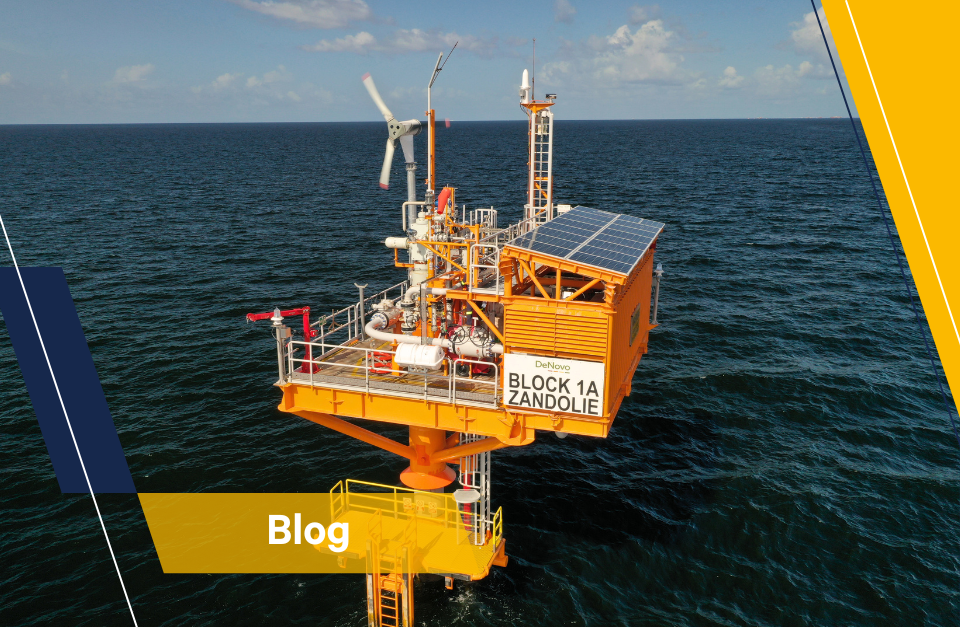
Modular systems offer further opportunities. Our Sea Swift platform, for example, is designed for rapid fabrication and deployment using local yards and marine assets. This type of system reduces costs, accelerates schedules and supports Nigerian manufacturing capability.
Renewable integration adds another interesting opportunity for platforms to capitalise on Nigeria’s vast solar resources to further optimise operations. In Angola, Aquaterra delivered a 100% autonomously powered Sea Swift platform for a supermajor, using solar PV panels with battery storage to provide continuous power. The project eliminated the need for diesel refuelling trips, reduced offshore personnel exposure and cut both OPEX and CAPEX.
Following this same logic, the broader energy transition is increasingly part of the conversation. Nigeria already generates nearly a quarter of its electricity from renewable sources, placing it ahead of major economies such as the United States and Japan. Within the offshore sector, carbon capture and storage (CCS) is seen as a major future opportunity.
Nigeria is particularly well suited for CCS because of its extensive offshore legacy wells and infrastructure, along with deep subsurface knowledge. At Aquaterra, we are already supporting CCS initiatives such as the Northern Endurance Partnership in the UK and Project Greensand in Denmark. While Nigeria is not yet at this stage, it has the potential to emerge as a leader in West Africa as thinking around CCS develops and regional demand for decarbonisation grows.
This combination of short-term growth and long-term planning is shaping Nigeria’s role as a regional leader. Success at home could provide a template for the wider Gulf of Guinea, while growing domestic capability may allow Nigerian firms to support offshore projects across West Africa.
The building blocks are in place: experience, infrastructure, engineering depth and local fabrication. If Nigeria continues on its current path, it could set the standard for offshore energy in the region for decades to come.
Q: Why is Nigeria central to West Africa’s offshore oil and gas future?
A: Nigeria combines a mature energy base, new refining capacity and a shift in ownership from international oil companies to local operators. This creates momentum for growth, with the potential to set a model for the wider Gulf of Guinea.
Q: How is local content in Nigeria evolving?
A: Local content requirements now emphasise real capability-building rather than box-ticking. Partnerships like Aquaterra and Intrepid Energy show how international expertise and Nigerian delivery can strengthen domestic industry and skills.
Q: Why are well intervention campaigns important for Nigeria’s offshore sector?
A: Interventions restore production from mature wells quickly and cost-effectively. With short offshore distances, favourable conditions and skilled local teams, Nigeria is well placed to maximise output through intervention-led strategies.
Q: What role do modular systems and renewable power play in new developments?
A: Modular platforms such as Sea Swift allow faster, lower-cost deployment using local yards and assets. Adding solar power reduces diesel use, limits fuel runs and cuts emissions, improving both economics and sustainability.
Q: How does the energy transition fit into Nigeria’s offshore future?
A: While boosting production remains a priority, Nigeria is preparing for carbon capture and storage. Assessing today’s wells not only supports output but also builds knowledge essential for future CCS projects.
Bibliography
Splash247 (2024) – Aquaterra wins well intervention work in Nigeria
PwC (2017) – The World in 2050: The long view – how will the global economic order change?
https://www.pwc.com/gx/en/research-insights/economy/the-world-in-2050.html#download
United Nations DESA (2022) – World population projected to reach 9.8 billion in 2050 and 11.2 billion in 2100
https://www.un.org/en/desa/world-population-projected-reach-98-billion-2050-and-112-billion-2100
Nigerian Upstream Petroleum Regulatory Commission (NUPRC) – Homepage
International Energy Agency (IEA) – Nigeria Country Profile
https://www.iea.org/countries/nigeria
NUPRC (2025) – Upstream Gaze Magazine Vol. 8
https://www.nuprc.gov.ng/wp-content/uploads/2025/01/Upstream-Gaze-Magazine-Vol.-8.pdf
Aquaterra Energy – Shallow Water Subsea Intervention Projects: My Top 5 Strategies for Success